 Mueen Studio
“How much does packaging design cost?” is the first question most founders ask, and the honest answer is that it depends on a few things you can control. This guide explains what you are paying for, what pushes a quote up or down, and the prices I charge at Mueen Studio, so you can budget before you send a brief.
The short answer
At Mueen Studio, a product label is $150–180, a stand-up pouch or Mylar bag is $200–250, and a carton, mailer or display box is $250–350. Rigid, magnetic and structural packaging is quoted after I review your requirements, because the work changes a lot from one box to the next. On the Amazon side, a 7-image listing package is $350, Basic A+ Content (EBC) with 7 modules is $400, Premium A+ Content with a continuous-flow design is $450, and Brand Store designs are quoted per store.
Those prices cover one design on one dieline. Where you land within a range depends on the factors below, and every quote is fixed before work starts. Anything not listed, such as 3D renders or a multi-SKU range, gets a custom quote. You can see the full list on the pricing page.
| Packaging type | Price | Typical timeline |
|---|---|---|
| Product label | $150–180 | 3 to 7 days including revisions |
| Stand-up pouch or Mylar bag | $200–250 | 3 to 7 days including revisions |
| Folding carton, mailer or display box | $250–350 | Depends on structure and panels |
| Rigid or magnetic box | Quoted after reviewing requirements | 1 to 3 weeks for box structures |
| Structural packaging and dielines | Quoted after reviewing requirements | 1 to 3 weeks |
| 3D renders and mockups | Custom quote | Depends on views and scenes |
What you are paying for
A packaging design fee covers much more than a nice front panel. On every project you are buying four things.
- Thinking before drawing. Product, audience, shelf and competitor research, so the design has a job to do.
- Concepts. Several design directions so you can choose quickly instead of revising one idea forever.
- Structure and artwork together. The dieline, inserts, hierarchy and claims are planned at the same time, so the logo doesn’t land on a glue flap and the barcode doesn’t wrap around a corner.
- Production files. Press-ready PDFs on the printer’s dieline, editable Adobe Illustrator source files with fonts outlined and images linked, and PNG or JPG previews. Files are checked against your printer’s specifications before handover.
That last step is where cheap packaging gets expensive. A file with missing bleed, an RGB image or the wrong dieline can cost a full print run. Before freelancing I spent four years as the in-house packaging designer at a cosmetics manufacturer, doing press checks on the factory floor, so I price in the checking, not just the drawing.
Seven things that change the price
1. The packaging format
A label is one flat panel with wrap and overlap allowances. A folding carton has six or more panels plus flaps. A rigid box has a wrap, a tray, often an insert, and finishes such as foil or emboss. More panels and more parts mean more design and more file preparation.
2. Whether you have a dieline
If your printer has already given you a dieline, the artwork is built on it. If you don’t have one, I draw it to your product’s dimensions and you send it to the printer to confirm. Custom structures, inserts and displays take more engineering, which is why structural packaging is quoted after I review your requirements.
3. Number of SKUs
A range of flavours or sizes is cheaper per SKU than designing each one separately, because the layout is built once as a system and each variant changes colour, name and copy. The first SKU carries most of the design cost.
4. How much copy goes on the pack
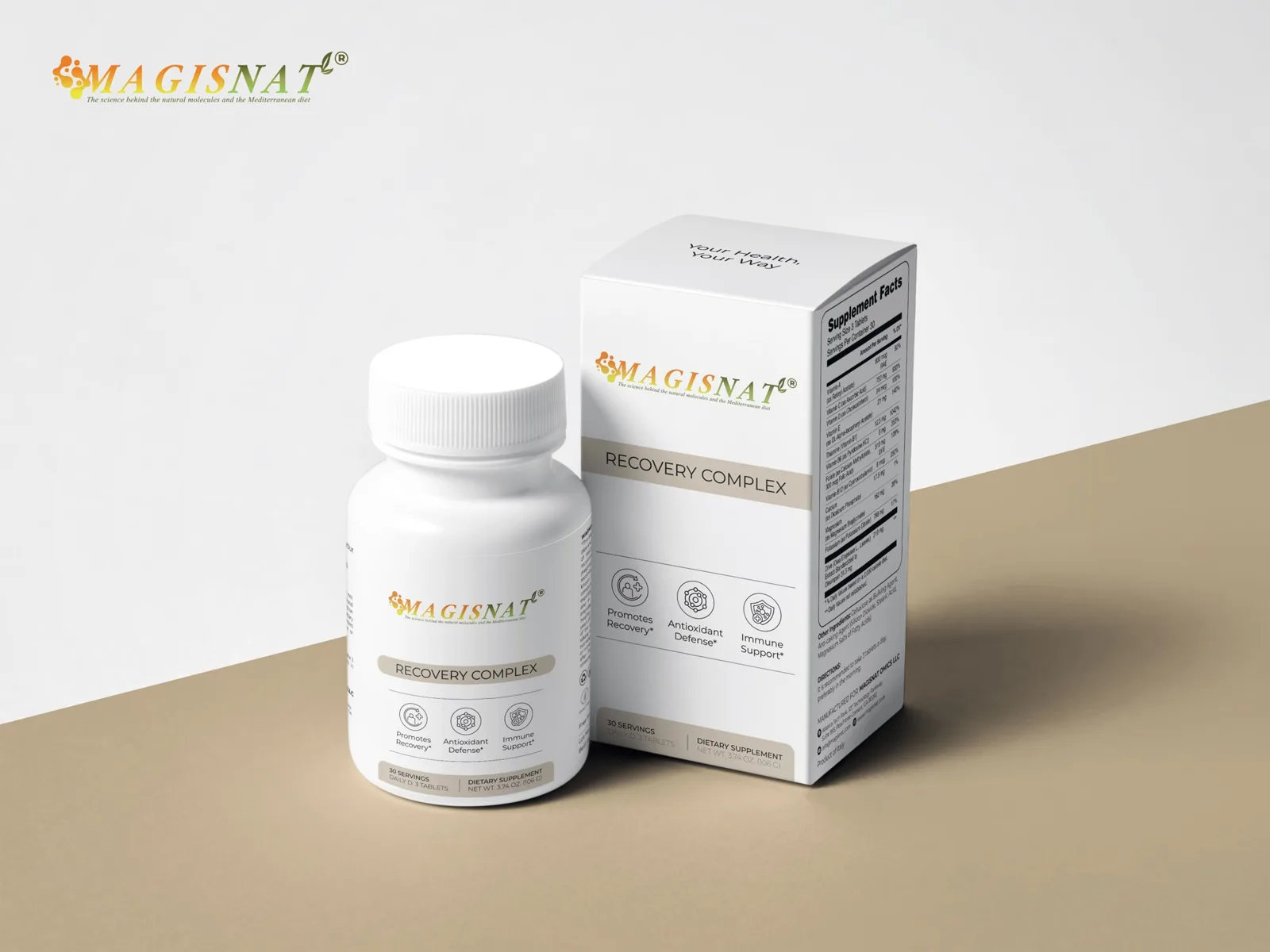
Supplements, food and cosmetics carry facts panels, ingredients, directions, warnings and claims. Fitting all of it on small panels without losing legibility is real work. You supply the approved copy; regulatory review stays with your compliance team.
5. Finishes
Foil, embossing, spot UV and white ink on clear or metallic film are prepared as separate plates or layers. In the Timeless Radiance case study the carton needed three plates: CMYK, emboss and spot UV, each set up on the same dieline.
6. 3D renders
Photoreal renders are useful for approvals, pre-launch pages, crowdfunding and Amazon. They’re optional and get a custom quote based on the number of views and scenes.
7. Revision rounds
Every quote states the revision rounds up front. Most packaging projects are approved within two or three rounds, because the concept and dieline are agreed before detailed artwork starts.
Freelancer, agency or template?
Templates are cheap but rarely fit your printer’s dieline, and they look like everyone else on the shelf. Large agencies add brand strategy and account management, which is worth it for some companies but not for a founder launching their first product. A specialist packaging designer sits in between: you work directly with the person drawing your files, and that person knows what a printer needs.
If you go freelance, check proof, not promises. I’m Top Rated Plus with 100% Job Success on Upwork, with 260+ packaging and Amazon projects and a 4.98 average from 142 client reviews. Clients can only leave those reviews after a paid contract.
How to get an accurate quote
A vague brief gets a vague number. Send these and you’ll get a fixed quote, usually the same day:
- Product and container dimensions, or your printer’s dieline
- Packaging type: label, pouch, carton, rigid box or a mix
- Number of SKUs and variants
- Your copy, or a note that you need help structuring it
- Finishes you’re considering, such as foil, emboss or spot UV
- Whether you need 3D renders or Amazon images from the same artwork
- Your launch date
Planning a carton or mailer? See examples and what’s included on the box packaging design page, or send a project brief.
Payment and ownership
Projects start with 50% upfront, and the balance is due on approval, before the final files are delivered. Once the project is paid, the final artwork and source files are yours to print and use. NDAs are fine for unreleased products. I don’t print packaging myself; I prepare the files and work with your printer or manufacturer on specs, proofs and any corrections they ask for.