 Mueen Studio
This guide explains how founders can plan a rigid-box project that feels intentional, protects the product and remains practical to manufacture.
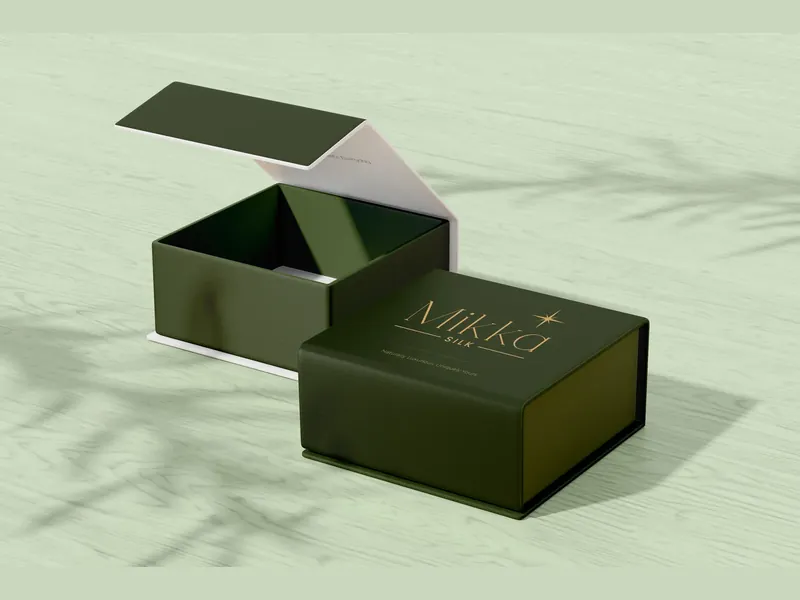
Start with the product and customer
Before choosing finishes, define the product dimensions, weight, fragility, retail environment, shipping method and target customer. A beautiful package that damages easily or costs too much to ship is not a successful design.
Choose the right luxury box structure
Magnetic closure box
Magnetic rigid boxes create a memorable opening experience and work well for gift sets, cosmetics, jewellery and premium accessories. They require careful board engineering and magnet placement.
Two-piece lid and base
A lid-and-base box is timeless, versatile and suitable for many product categories. The reveal between lid and base can become part of the visual identity.
Drawer box
Drawer or sleeve-and-tray packaging creates a controlled reveal and works well for compact products. Add a ribbon pull only when it improves usability.
Materials that create a premium feel
- Rigid greyboard selected for the product weight
- Coated, uncoated or textured wrapping paper
- Paperboard or moulded-pulp inserts
- Foam inserts when protection requires them
- Fabric, ribbon or paper accessories used with restraint
The most expensive material is not automatically the best. Consistency, clean wrapping and precise fit matter more than decorative excess.
Want help with this? See examples and what’s included on the rigid and magnetic box design page, or send a project brief.
Use finishes with purpose
Foil stamping, embossing, debossing, spot UV and specialty papers should reinforce hierarchy. One controlled finish on a strong layout often looks more premium than several finishes competing for attention.
Ask the printer for minimum line weights, tolerances and finish samples before finalizing artwork. Fine details may fill in or shift during production.
Plan the insert and unboxing sequence
The insert should hold the product securely, make removal intuitive and present every component in a logical order. Test finger access, cable storage, booklets and replacement parts with a physical prototype.
Common luxury packaging mistakes
- Choosing the box before confirming product dimensions
- Using too many finishes and type styles
- Ignoring shipping weight and outer-carton protection
- Designing an insert that is difficult to use
- Approving colours only on screen
- Skipping a production sample
What to send your packaging designer
Provide accurate product measurements, reference photography, required copy, logo files, brand guidelines, target budget, order quantity, printer requirements and launch date. Clear information produces better structural and visual decisions.